
Note · 2 Pages
Important Formulas: Orienting Yourself: The Use of Coordinates
1. Coordinates of a Point
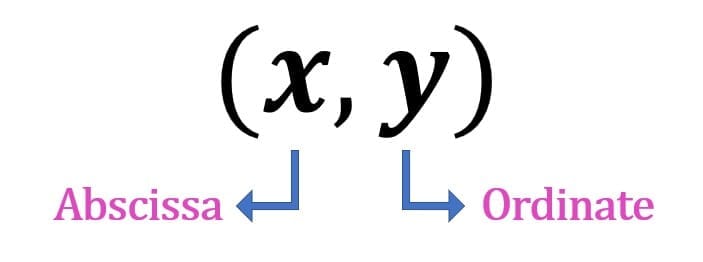
For a point P in the Cartesian plane, its coordinates are written as:
where = abscissa (x-coordinate) and = ordinate (y-coordinate)
- x-coordinate (abscissa): Perpendicular distance of P from the y-axis, measured along the x-axis.
- y-coordinate (ordinate): Perpendicular distance of P from the x-axis, measured along the y-axis.
1.2 Special Coordinate Cases
- Point on the x-axis:
- Point on the y-axis:
- Origin O:
- The x-coordinate of any point on the y-axis is 0.
- The y-coordinate of any point on the x-axis is 0.
2. Ordered Pair Rule
If , then
If , then
The order of coordinates matters. Interchanging the x and y values gives a different point unless both coordinates are equal.
3. Quadrant Sign Convention
The coordinate axes divide the Cartesian plane into four quadrants, numbered I to IV (anti-clockwise from the top-right):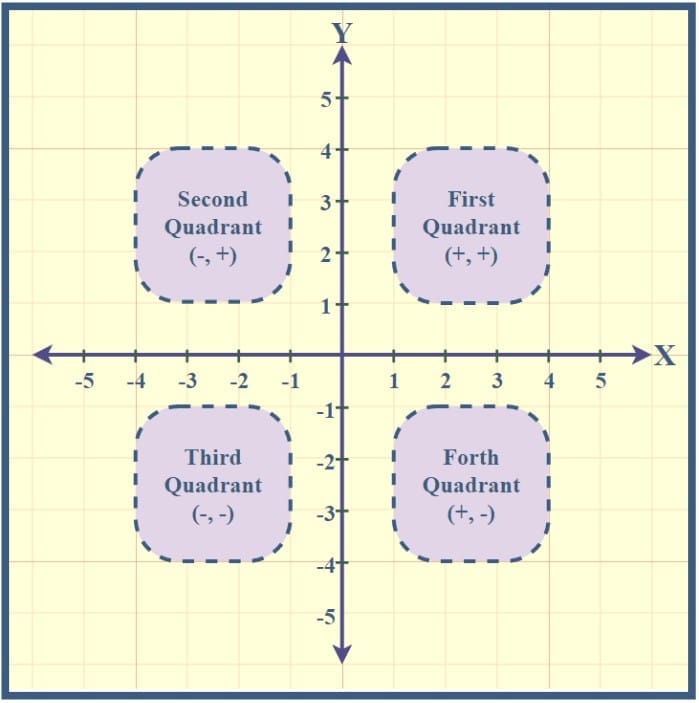
| Quadrant | x-coordinate | y-coordinate | Sign Form |
|---|---|---|---|
| I | Positive (+) | Positive (+) | |
| II | Negative (-) | Positive (+) | |
| III | Negative (-) | Negative (-) | |
| IV | Positive (+) | Negative (-) |
4. Distance Formula
The distance between two points and in the 2-D plane is given by the Baudhāyana-Pythagoras Theorem:
The sign of or does not affect the result since both differences are squared.
Example: Distance between and :
4.1 Special Cases of Distance Formula
- Distance between two points with the same y-coordinate(points on a horizontal line):
- Distance between two points with the same x-coordinate(points on a vertical line):
- Distance of a point from the origin:
5. Distance of a Point from the Axes
- Distance of from the x-axis:
- Distance of from the y-axis:
Example: For point C(-3, -2): Distance from x-axis = = 2 units; Distance from y-axis = = 3 units.
6. Reflection in an Axis
Reflection in an axis preserves all side lengths of a figure.
- Reflection of in the y-axis:
- Reflection of in the x-axis:
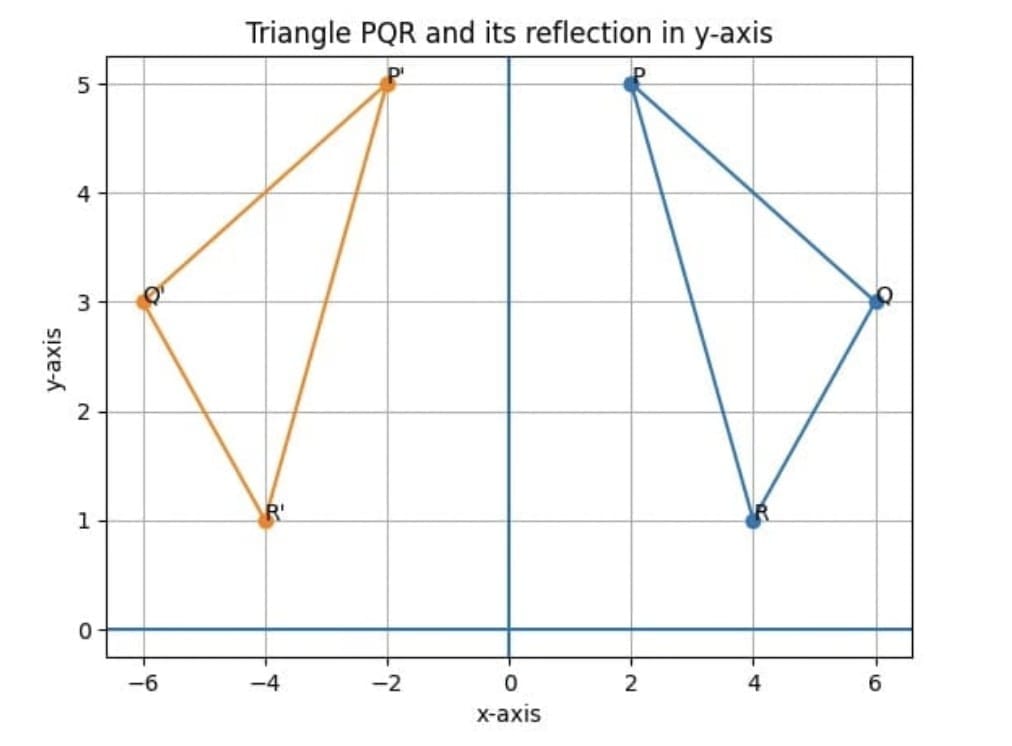 If triangle PQR reflects to triangle P′Q′R′, then all corresponding side lengths are equal:
Because squaring eliminates sign differences, the distance formula gives the same result for a figure and its reflection.
Want to save your progress? Log in to your account.